“This year, the foundation’s hard work gained national recognition by winning Texas’ top conservation honor: the Leopold Conservation Award. The Sand County Foundation, a national nonprofit land conservation organization, presents the $10,000 award to one rancher or organization each year in honor of conservationist Aldo Leopold. Unlike past Texas honorees, the Dixon Water Foundation is not an individual landowner but a nonprofit organization focused on the bigger picture of Texas’ land health.”
MEDIA COVERAGE
Study affirms adaptive grazing’s water benefits
Adaptive multi-paddock grazing enhances water conservation and protects water quality, according to a recent Texas AgriLife study published in Agriculture, Ecosystems & Environment.
“We found grazing management practices do have a significant influence on ecosystem services provided by rangelands,” said co-author Dr. Srinivasulu Ale, a geospatial hydrology associate professor. “Not only did the multi-paddock grazing practice provide several hydrological benefits such as increased soil infiltration, increased water conservation and decreased surface runoff, but also environmental benefits such as water quality improvement.”
Richard Teague, an AgriLife rangelands researcher in Vernon and science advisory board member for the foundation, was another co-author on the study. Teague said the research was designed to help producers assess the hydrologic and water quality impacts of traditional and alternate grazing management practices and identify best management practices for long-term sustainability of rangelands.
The Dixon Water Foundation funded the research project and employs adaptive multi-paddock grazing on Dixon Ranches.
For a summary of the research findings, visit the Texas AgriLife news website. The complete journal article is also available on ScienceDirect: “Evaluating the ranch and watershed scale impacts of using traditional and adaptive multi-paddock grazing on runoff, sediment and nutrient losses in North Texas, USA.”
Treading West Texas Waters now online
“Treading West Texas Waters,” a 30-minute documentary about regional water issues, is now available online through Basin PBS. Dixon Water Foundation President Robert Potts features prominently in the documentary, an original production by Chris Hillen and Joe Cashiola for Basin PBS. The documentary looks at the state of water resources in West Texas, how different parts of the region are dealing with water scarcity, and possible pathways forward through water conversation and management.
More international accolades for the Josey Pavilion
The Betty and Clint Josey Pavilion has been honored with an American Architecture Award from the Chicago Athenaeum Museum of Architecture and Design. The Josey Pavilion is the state’s first Living Building, the most advanced measure of sustainability in the built environment. Since 1994, The Chicago Athenaeum Museum of Architecture and Design, together with The European Center for Architecture Art Design and Urban Studies and Metropolitan Arts Press, have organized The American Architecture Awards to honor the best, new significant buildings and landscape and planning projects designed or built in the United States and abroad by the most important American architects, landscape architects, and urban planners practicing nationally and internationally and International architects and designers practicing inside the USA.
Pavilion receives AIA environment award
The Betty and Clint Josey Pavilion is among the prestigious AIA Committee on the Environment’s (COTE’s) Top Ten award winners, as reported by Architectural Record. Designed by Lake|Flato, the pavilion was recently certified as Texas’s first Living Building. The education and event center on Dixon Ranches Leo Unit has received several other honors, including the 2015 Architizer A+ Award for Architecture + Sustainability, the 2015 Texas Society of Architects Design Award, and the 2014 AIA San Antonio Design Award.
Josey Pavilion in Wall Street Journal’s Best Architecture
“This year’ s best buildings proved that architecture doesn’t have to be loud to be important,” begins Julie Iovine in the Wall Street Journal’s article, “The Best Architecture of 2015.” The Betty and Clint Josey Pavilion tops their list of four buildings that “stand out not only for their silhouettes but for working with what already exists, with what their communities need, with the environment and, above all, with an expectation of lasting for longer than a season of attention-grabbing headlines.”
The pavilion is the foundation’s 5,000 square-foot meeting and education center at Dixon Ranches Leo Unit in Cooke County. It’s on track to become Texas’s first Living Building, the most rigorous international green-building certification.
“Architects Ted Flato and David Lake posit that a connection to beautiful architecture can lead to caring and a desire to preserve and conserve one’s surroundings. This low-key, elegant building makes a case that it could truly be so,” Iovine writes.
Soil Carbon Curious
Soil Carbon Curious is a new short film from Peter Byck, the producer of Soil Carbon Cowboys and Carbon Nation. It’s about an exciting new collaborative research group, the ASU•Soil Carbon Nation Whole Systems Science Team. As Byck describes:
“Adaptive Multi-Paddock grazing (AMP grazing) is regenerating soils around the world, producing healthy grass-finished beef. But the science on AMP grazing is sparse, to say the least. Now, a group of leading soil, rangeland, bug and social scientists are setting out to fill the science gap. Led by Dr. Richard Teague of Texas A&M, and convened by filmmaker Peter Byck of Arizona State University, the ASU•Soil Carbon Nation Whole Systems Science Team is positioned to do large scale science that’s never been done before.”
The team is working on the 1 Million Metric Tons Pilot Program, which aims to demonstrate the carbon-sequestration potential of soil managed with adaptive multi-paddock grazing.
You can now also view Soil Carbon Cowboys en español.
SRSU sustainable ranching students in Odessa news
Students in Sul Ross State University’s sustainable ranch management program were featured in an article in the Odessa American. Steve Lang writes:
Despite a steady rain, students learned basic welding techniques in assembling gates on the O2 Ranch.
“They got to use a bit of grit to get the job done,” said Bonnie Warnock, Clint Josey Endowed Chair for Sustainable Ranch Management.
Respect and Vision are other operative words for the new program, which will offer both a B.S. degree and certificate program in sustainable ranch management. Through a combination of classroom and hands-on ranch experience, students will learn how to manage a ranch, literally from the soil up. The curriculum includes classes in soils, range management, wildlife management, animal husbandry and agricultural business…
…Rob Kinucan, Dean of the College of Agricultural and Natural Resource Sciences, said the Sustainable Ranch Management program came to fruition through a pleasant combination of personnel and support.
“This has been an aspiration of Bonnie’s since she first joined the faculty, but we never had the mechanism to make it happen until the Dixon Water Foundation created the endowment,” he said.
“This is a wonderful opportunity and we have the perfect person to lead the program. Bonnie has the right combination of an academic background blended with applied life skills in ranching. This is a stellar program that really fills a niche in West Texas.”
Read the full article on the Odessa American website. And learn more about the sustainable ranching program on the Sul Ross website.
Grass workshop and trail opening at Mimms
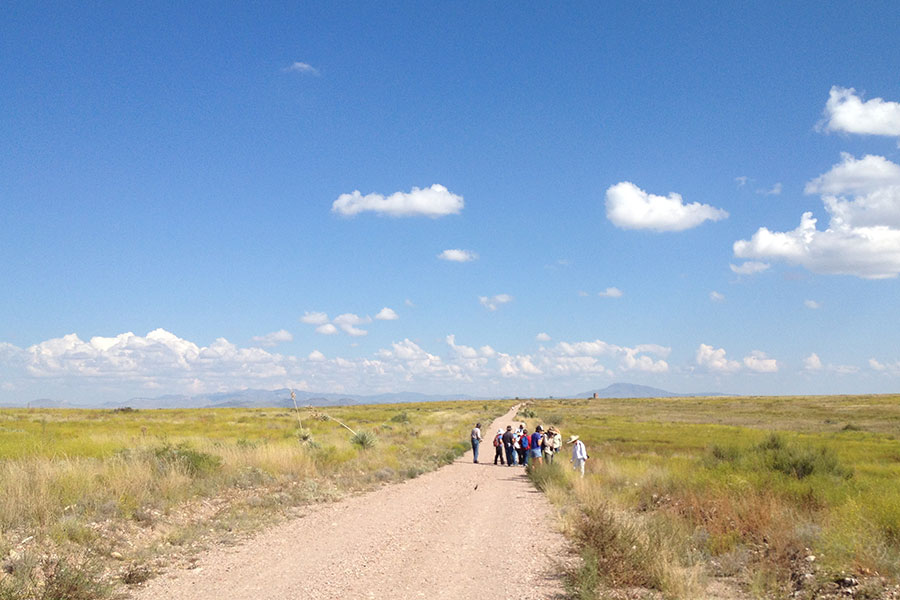
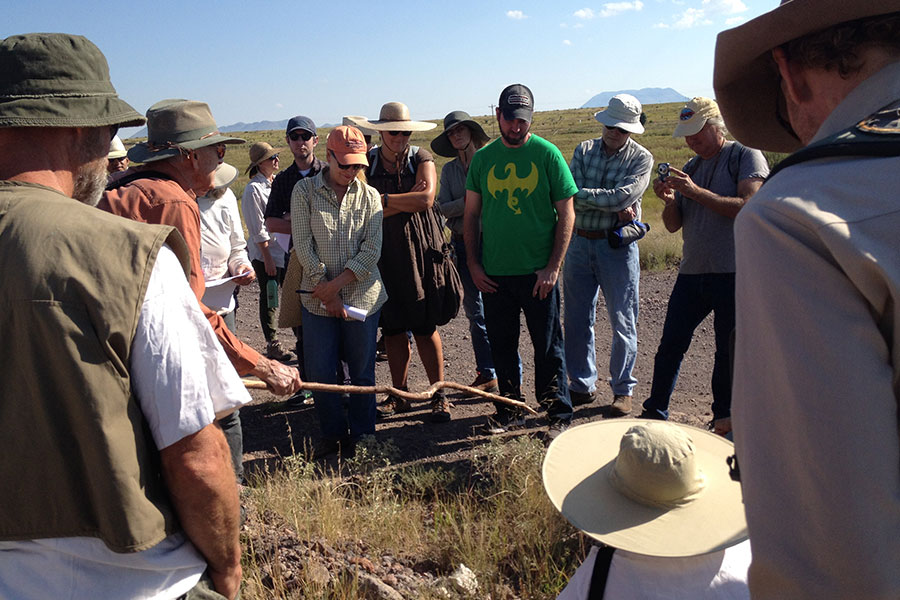
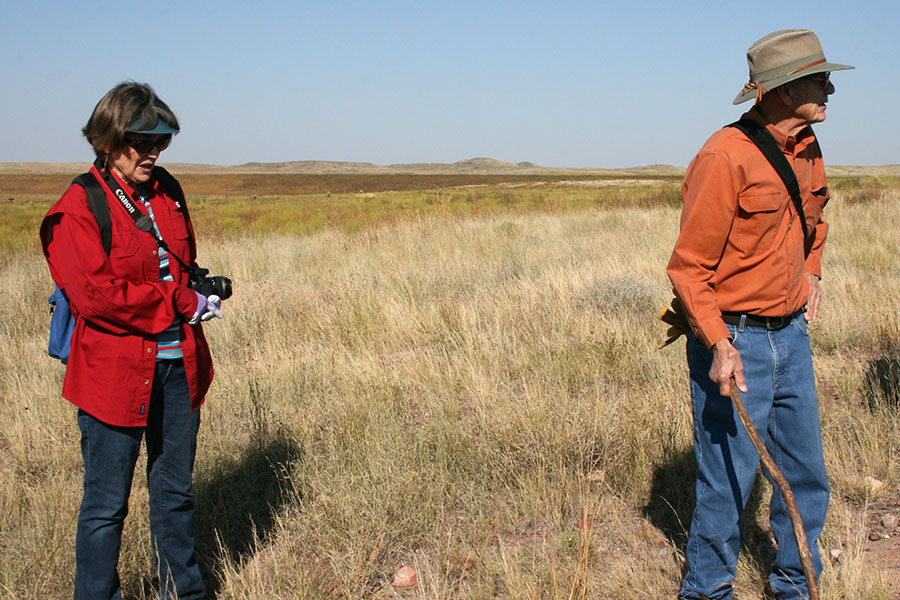
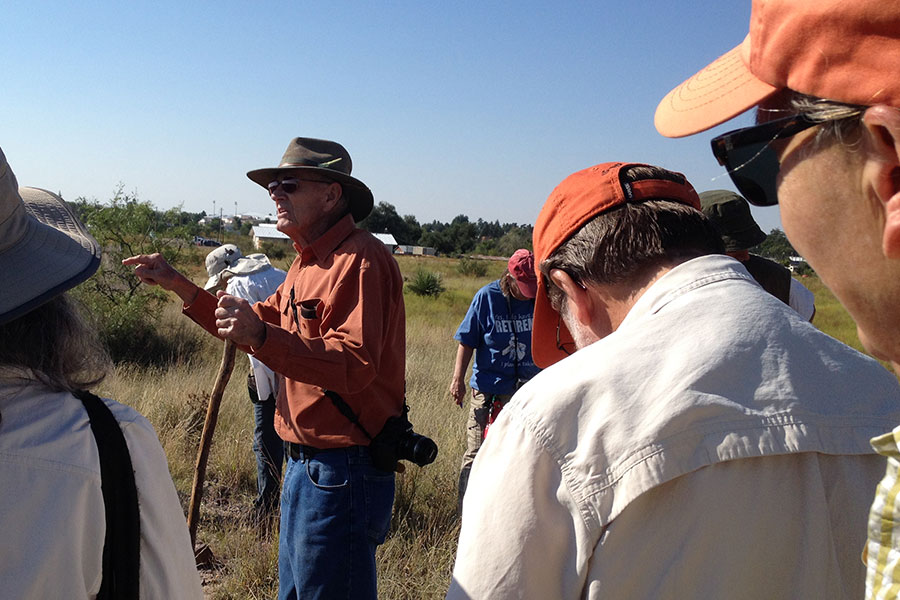
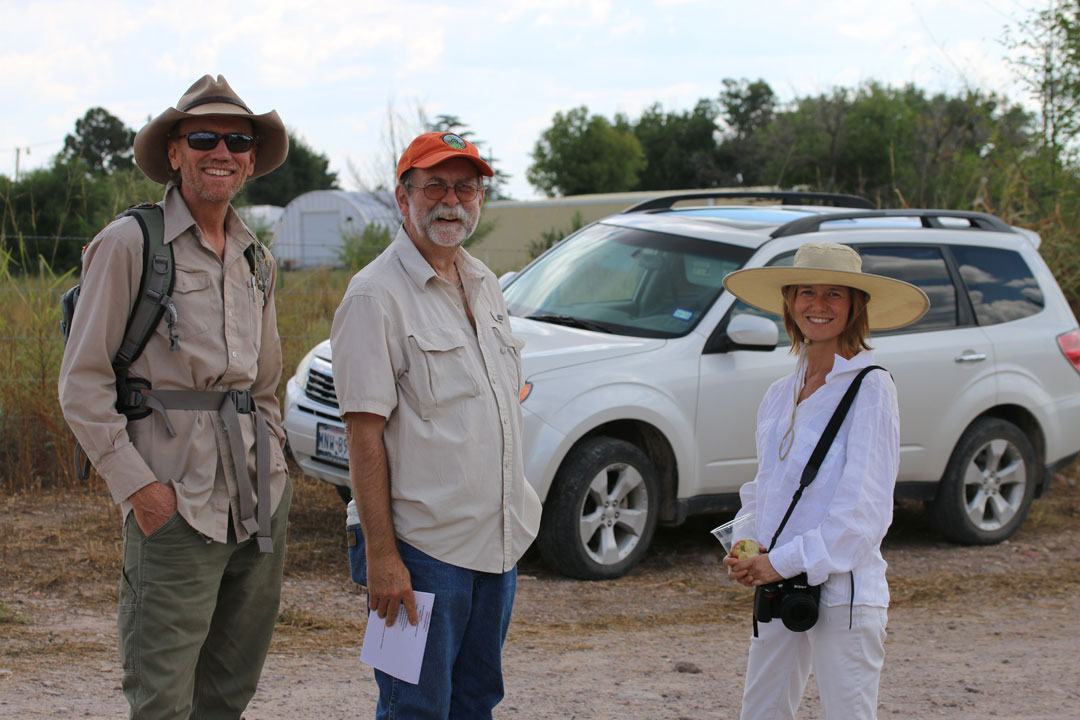
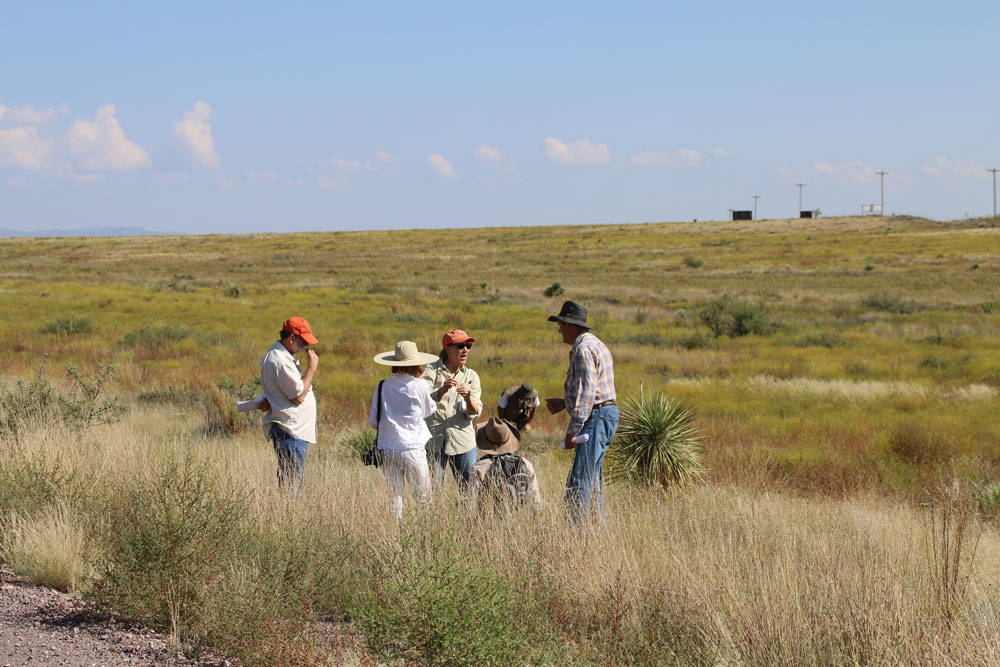
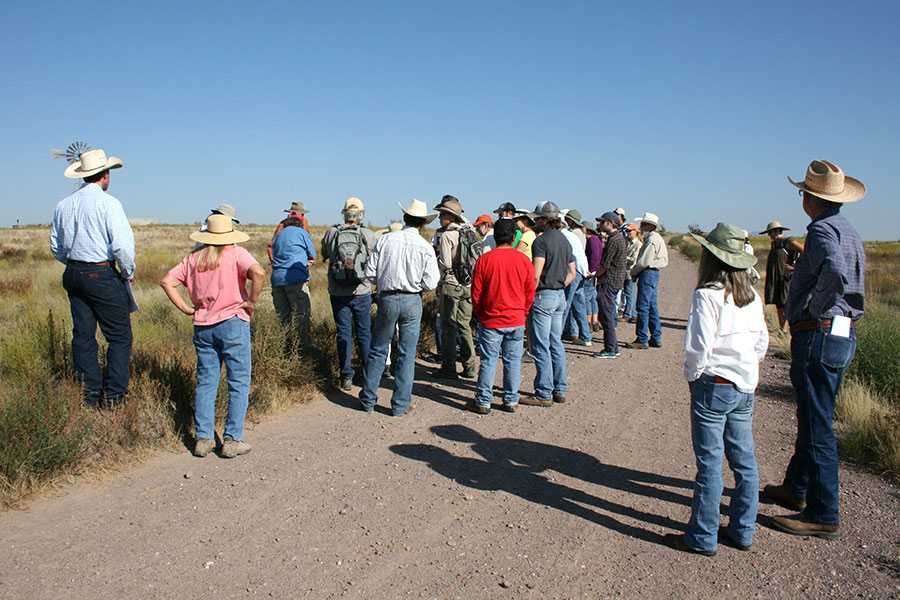
The Overlook Trail at Dixon Ranches Mimms Unit officially opened September 26, 2015, in conjunction with a grass identification workshop with Dr. Michael Powell of Sul Ross State University. About 45 people attended the workshop, and many of them stayed for a group interpretive hike to the Overlook viewing area, designed by Marfa’s Joey Benton. Local flora and fauna experts from the Texas Master Naturalists Tierra Grande Chapter answered questions along the way.
The Big Bend Gazette featured the trail opening and workshop in an article in its October issue, available here as a PDF.
Powell is Director of the Herbarium at Sul Ross State University, Distinguished Professor Emeritus of Biology, and author of numerous books and journal articles on plants native to the Chihuahuan Desert Region. Dr. Powell was assisted during the workshop with his wife Shirley Powell, a retired science teacher and the president of the board of directors at the Chihuahuan Desert Research Institute.
The 2.5-mile walking trail at Mimms is open during daylight hours and features exhibits about grazing management and the high-desert environment. The trail ends at the Overlook viewing area, where visitors can sit and appreciate spectacular views of the Marfa grasslands and surrounding mountains.
The foundation’s West Texas office and the trailhead are at the north end of Austin Street in Marfa. Please read and respect the guidelines for trail visitors posted at the entrance to the ranch. Dogs must remain leashed. Bicycles, motorized vehicles, camping, and firearms are not permitted.
Josey Institute hosts climate change dialogue
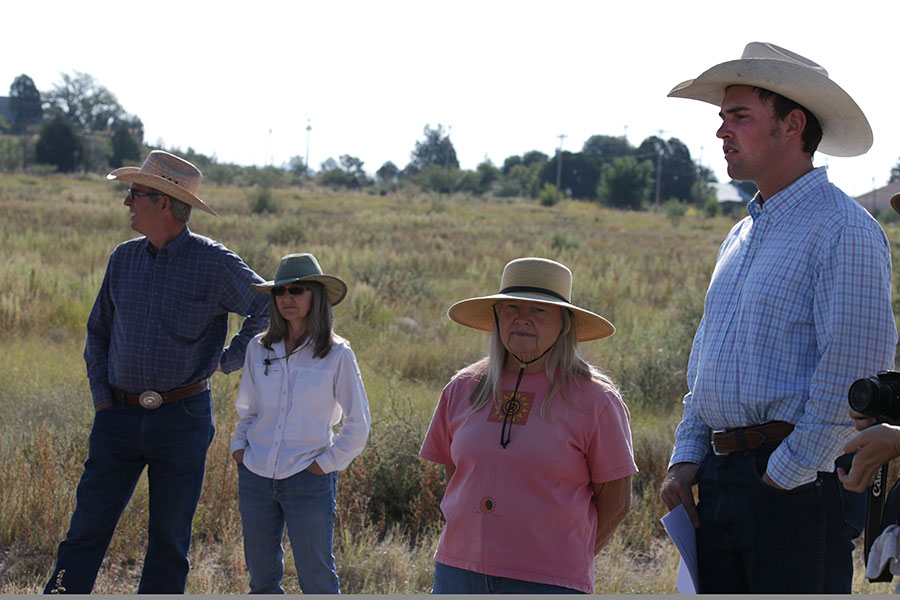
The Josey Institute for Agroecology at North Central Texas College in Gainesville is hosting a community dialogue about climate change on Sept. 17.
“People are naturally attuned to short-term thoughts and actions, while global climate conditions require long-term strategies,” said Dr. Lisa Bellows, director of the Josey Institute. “Education from a local to global perspective is imperative to ensuring sustainability.”
The institute was created through a grant from the Dixon Water Foundation last year.
Special guest Pat Hoerth, an advocate for sustainable agriculture and a published author, will join the community in this conversation. Hoerth is the director of Turtle Rock Farm, a farm in Red Rock, Okla., dedicated to modeling sustainable practices in living and farming.
Fore more information on the event, read this article in the Gainesville Daily Register or on News 12 KXII.