Dixon Water Foundation

Promoting healthy watersheds through sustainable land management

  • About Us
    • About Us
    • Staff
    • Board of Directors
  • Ranches
    • Ranches
    • Sustainable land management
    • Mimms Unit
    • Bear Creek Unit
    • Leo and Pittman Units
    • Josey Pavilion
  • Grants
  • Education
    • School Partnerships
    • Landowner Education
    • Media Projects
    • Field Days
  • Research
    • Research Projects
    • Resources
  • News & Events
    • Recent News
    • Events
    • In The Media
    • Press Releases
  • Contact

PRESS RELEASES

Dixon endows Sul Ross chair in sustainable ranch management

February 20, 2014 by Dixon Water Foundation

Sul Ross State University will offer a new degree program in sustainable ranch management, thanks to a $1.2 million endowment from the Dixon Water Foundation of Marfa and Decatur.

The endowment establishes the Clint Josey Endowed Chair for Sustainable Ranch Management in the College of Agricultural and Natural Resource Sciences.

Through $200,000 annual increments over a six-year period, the foundation’s gift will pay for the creation of both a B.S. degree and a certificate program in sustainable ranch management as well as a permanent endowment.

“Young, experienced ranch managers are in short supply,” said Robert J. Potts, president and CEO of the Dixon Water Foundation. “This program will help train young people how to manage economically and ecologically sustainable ranches that are so important to our state’s future.”

Bonnie Warnock, professor of Natural Resource Management, will be the endowed professor.

“This is an academic program that will study the ranch as an ecosystem, with people as an integral part of this system,” she said.

Warnock has conducted extensive ecological research on the Dixon Water Foundation’s Mimms Unit northwest of Marfa. Mimms Unit is one of four Dixon ranches in Marfa and northeast Texas, where the foundation demonstrates sustainable land management practices.

Under terms of the endowment, Warnock will begin developing a curriculum this year, with the first students to be enrolled in fall 2015.

She noted that a ranch is a rangeland ecosystem, and successful management of a ranching enterprise should involve an understanding of soils, water, energy, nutrients, vegetation, wildlife, livestock, in addition to economics and business. The curriculum will include classes in soils, range management, wildlife management, animal husbandry and agricultural business.

“We are looking at our ranching heritage with traditional range animal science classes, but we are really buying into the future,” Warnock said. “We will be learning how to incorporate a sustainability component.”

Rob Kinucan, dean of the College of Agricultural and Natural Resource Sciences, said the endowment was the result of a lengthy working arrangement with the foundation.

“Bonnie has worked with the Dixon Water Foundation at the Marfa ranch for a number of years, and they appreciated the research she was conducting,” he said. “This endowment grew from that working relationship. The foundation board is an excellent group of people, and we are really pleased with this turn of events.”

Founded in 1994 by Roger Dixon, the Dixon Water Foundation promotes healthy watersheds through sustainable land management. In addition to demonstration ranches, the foundation finances annual grants, sponsors research projects and offers educational programs for landowners, students and others interested in sustainably managing land, water and wildlife.

Clint Josey is vice president and chairman of the board. When Roger Dixon died in January 2005, Josey became executor of his estate and president and CEO of the foundation. The foundation later changed its name to The Dixon Water Foundation. In 2007, Robert Potts became president and CEO, and Josey became vice president and chairman.

Warnock, who received Sul Ross’ Outstanding Teaching Award for 2011-12, joined the faculty in 2001. She ranches with her husband, Seth, near Marathon. Her family has been active in ranching near Marathon and Sanderson since the 1890s.

At Sul Ross, she teaches undergraduate classes in soils, range ecology, fire ecology, watershed management, habitat management, range inventory and plant identification. Warnock also teaches graduate classes in restoration ecology and field ecology.

This is the second endowed position at Sul Ross, both in the College of Agricultural and Natural Resource Sciences. In 2012, a $1 million gift from Peggy and Dan Allen Hughes Jr. of San Antonio/Beeville established the Dan Allen Hughes Jr. Endowed Director for Borderlands Research. Hughes is a member of the Borderlands Research Institute (BRI) Advisory Board of Directors.

 Pictured (seated, from left) are: Josey, Vice President and Chairman of the Board; Dr. Quint Thurman, Sul Ross interim President; Robert J. Potts, President and CEO, Dixon Water Foundation. (Standing), David Rogers, president of the Sul Ross Foundation; Dr. Bonnie Warnock, professor of Natural Resource Management; Dr. Rob Kinucan, Dean, College of Agricultural and Natural Resource Sciences. (Photo by Steve Lang)
Pictured (seated, from left) are: Josey, Vice President and Chairman of the Board; Dr. Quint Thurman, Sul Ross interim President; Robert J. Potts, President and CEO, Dixon Water Foundation. (Standing), David Rogers, president of the Sul Ross Foundation; Dr. Bonnie Warnock, professor of Natural Resource Management; Dr. Rob Kinucan, Dean, College of Agricultural and Natural Resource Sciences. (Photo by Steve Lang)
Filed Under: Press Releases, Recent News Tagged With: education, ranching

Marfa International School explores the desert at Dixon ranch

November 18, 2013 by Dixon Water Foundation

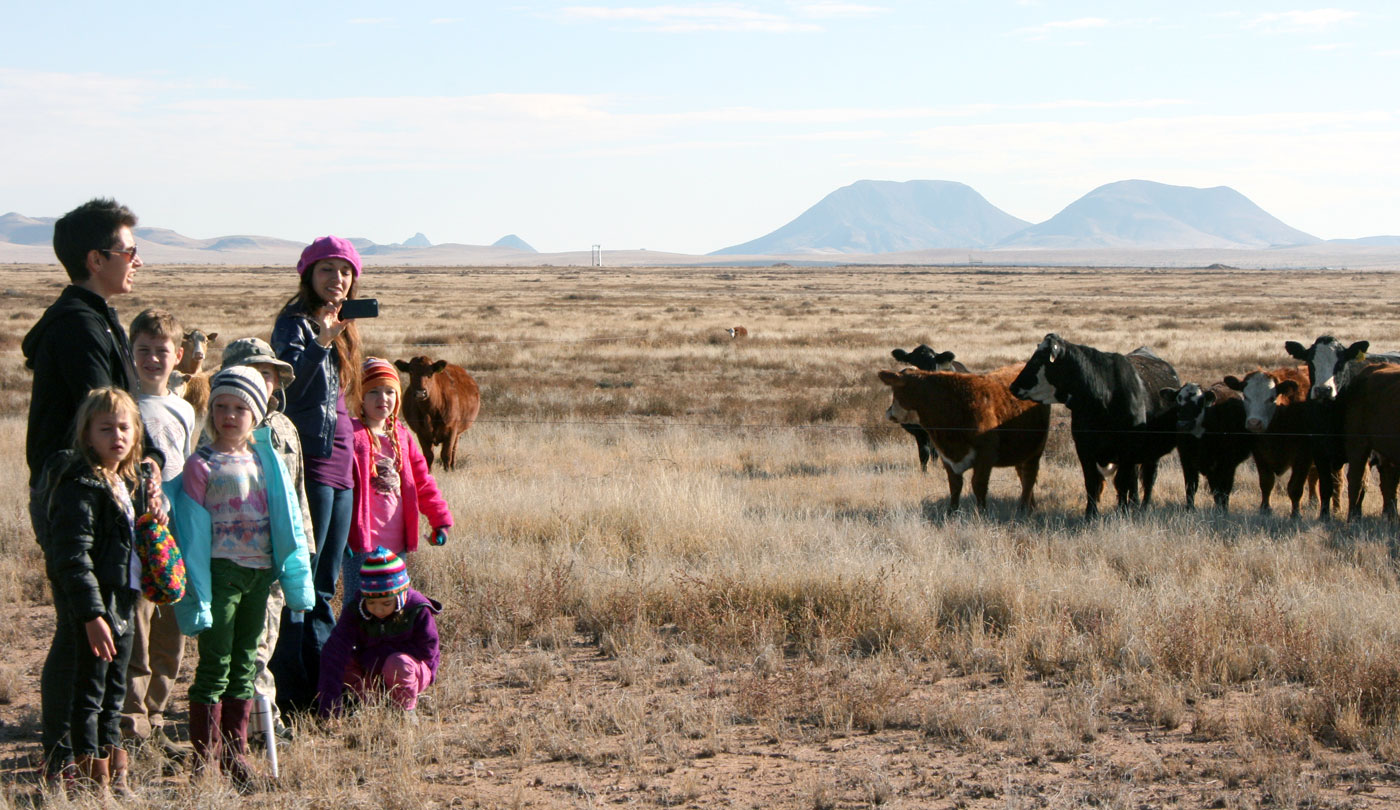
MARFA – Laughter and moos filled the air as a herd of children met the herd of cattle at the Dixon Water Foundation’s Mimms Unit last Friday, during the Marfa International School’s week-long “Living Classroom” at the ranch.

Twenty-four students from kindergarten through eighth grade learned about desert grasslands and sustainable land management through science projects and presentations by local experts. The children experienced what it’s like to be a wildlife biologist tracking animals; to be a scientist monitoring water and soil quality; and to be a botanist identifying grasses and collecting native plants. Chasing grasshoppers, listening to birds, and writing about the landscape were also part of the program.

Herds of kids and cows had a close encounter during the Marfa International School’s outdoor education program at the Dixon Water Foundation’s Mimms Unit last week. Students from kindergarten through eighth grade learned about desert grasslands and sustainable land management through science projects and presentations by local experts.

Herds of kids and cows had a close encounter during the Marfa International School’s outdoor education program at the Dixon Water Foundation’s Mimms Unit.

“This has been amazing,” said teacher Lisa Gordon. “To be outside actually doing this kind of science has so much meaning.”

The Dixon Water Foundation’s President and CEO Robert Potts introduced the ranch’s cattle management system, which mimics the grazing habits of native bison to conserve water, wildlife and the desert grassland.

“Cattle are the tool we use to keep more rainwater in the ground, improving the soil and improving the grassland,” he told the students, before demonstrating how he moves the ranch’s herd between pastures.

Mark Brandin, Marfa International School director, said the week was an enriching and memorable experience for all of his students.

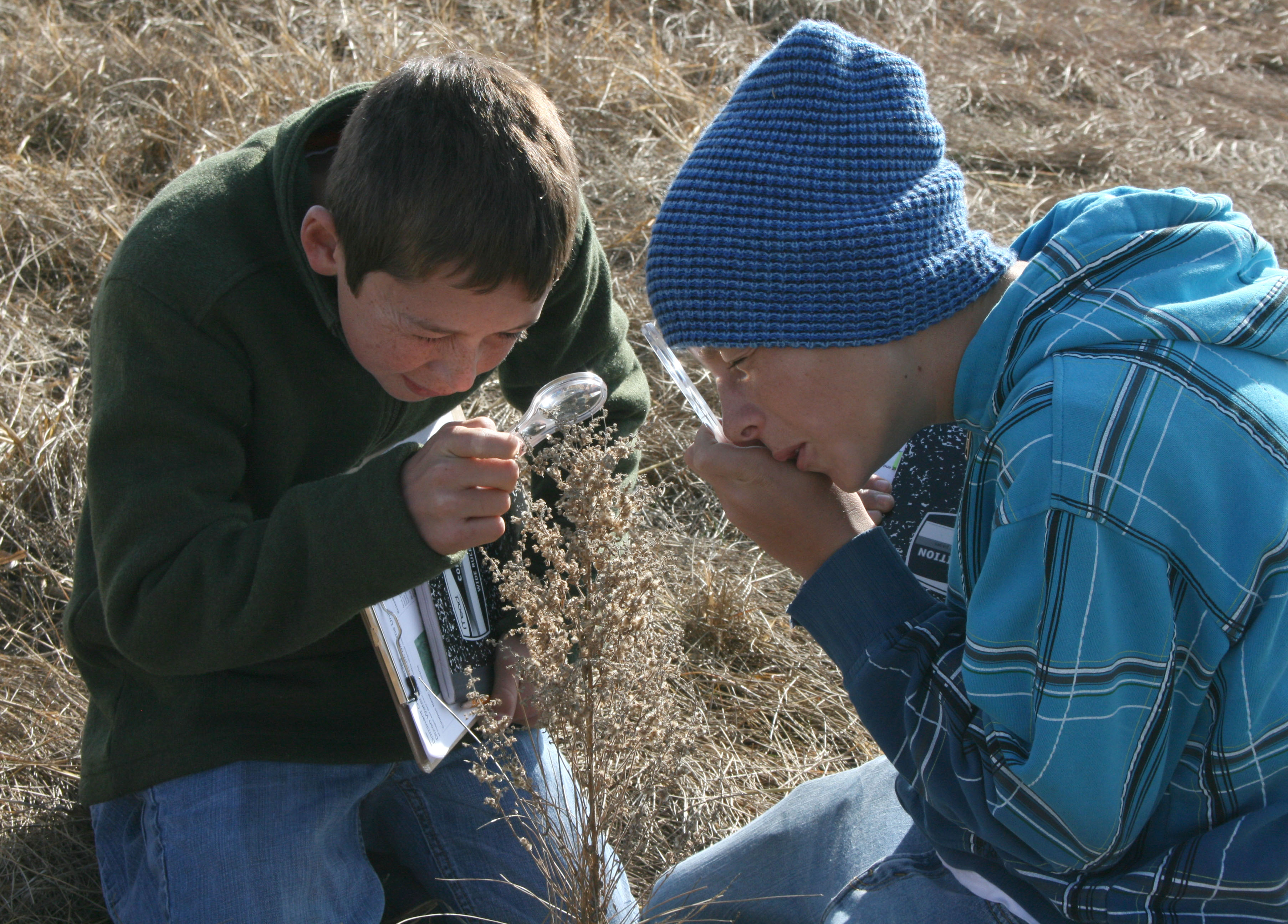
Marfa International School students Amos and Felix learned to identify grasses and other native plants during an outdoor education program at the Dixon Water Foundation’s Mimms Unit last week. Students from kindergarten through eighth grade learned about desert grasslands and sustainable land management through science projects and presentations by local experts.

Marfa International School students Amos and Felix learned to identify grasses and other native plants during the outdoor education program.

“I believe each child at MIS now has a much greater appreciation for the unique land in which we live, and we look forward to further studies at the ranch throughout the year,” he said.

The Dixon Water Foundation frequently welcomes students to its ranches in Marfa and northeast Texas. Last month Marfa ISD eighth-grade students had a nature writing workshop at Mimms, and Sul Ross State University wildlife management students took a field trip there in September.

Educators are invited to contact Potts at rpotts@dixonwater.org for information about visiting the ranch, as well as to discuss funding opportunities for using the ranch as a classroom.

Filed Under: Press Releases Tagged With: education, field program, Mimms Unit

Desert rodents rebound after summer rains

October 1, 2013 by Dixon Water Foundation

MARFA – Rodent researcher Bobby Allcorn had a busy September. Each week the Sul Ross State University graduate student trapped hundreds of small rodents—from petite silky pocket mice to husky wood rats—on the Dixon Ranches Mimms Unit. That’s great news for a host of other wild animals.

“The effects of the Rock House Fire, combined with the drought, devastated the small rodent population,” said Allcorn, whose research is funded by the Dixon Water Foundation, a non-profit that promotes healthy watersheds through sustainable land management. “These animals do rebound with precipitation though. And they’re coming back in force.”

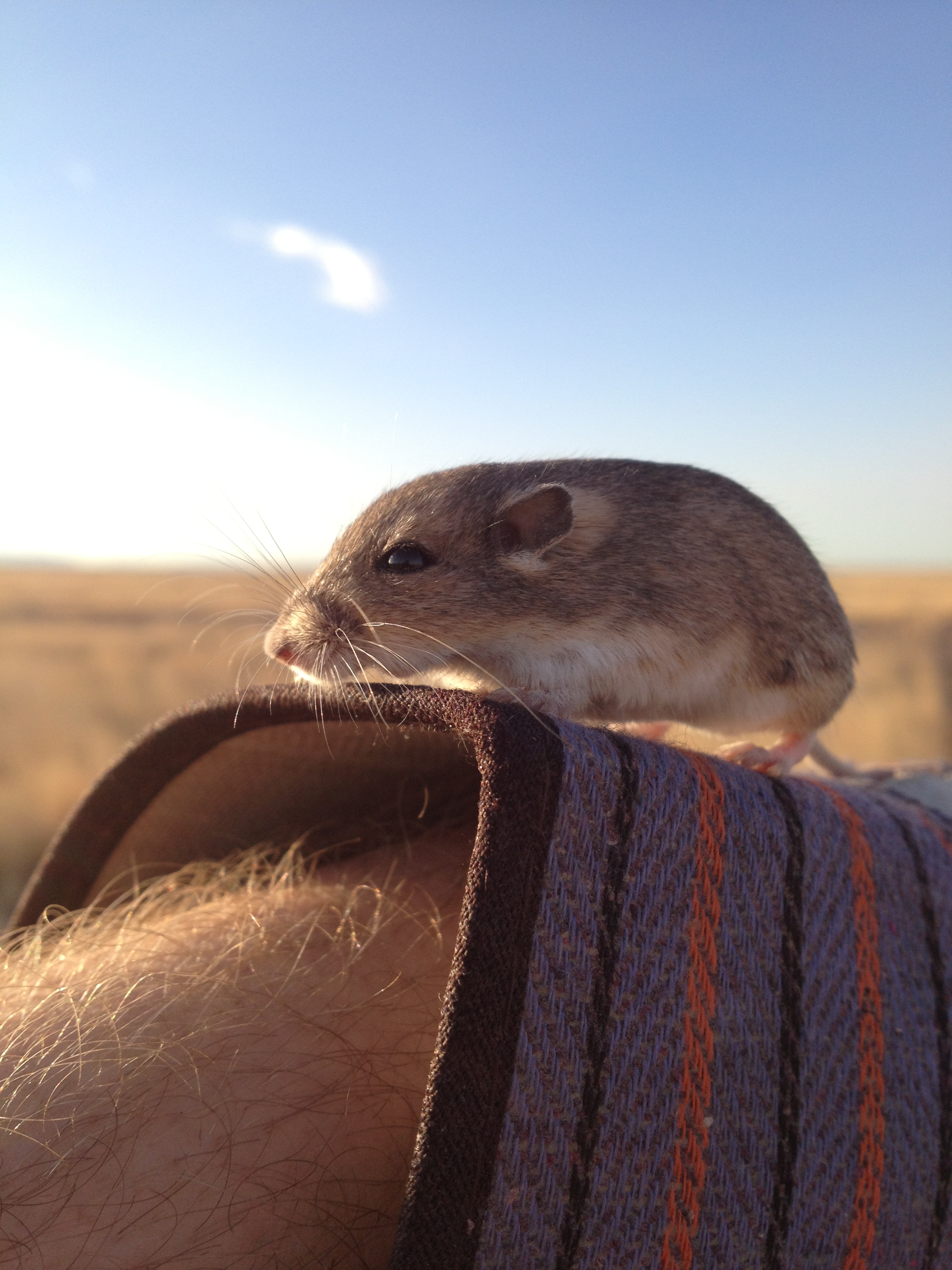
While the drought persists, recent rains have been a boon to small rodents, like this silky pocket mouse found on the Dixon Ranches Mimms Unit near Marfa. (By Bobby Allcorn/Borderlands Research Institute)

While the drought persists, recent rains have been a boon to small rodents, like this silky pocket mouse found on the Dixon Ranches Mimms Unit near Marfa. (By Bobby Allcorn/Borderlands Research Institute)

In 2011, the Dixon Water Foundation partnered with Dr. Bonnie Warnock of Sul Ross’s Borderlands Research Institute to monitor the small-rodent population on the Mimms Unit. Then the historic Rock House Fire burned most of the ranch on Marfa’s northwest edge.

Without vegetation to eat or hide in, the number of mice and rats crashed, to the point that researchers rarely caught a rodent. The effects ricocheted throughout the food web, from bobcats to quail.

“Predators eat small rodents, so if there aren’t any small rodents, larger animals become prey more often,” Allcorn said. “For example, pronghorn really suffered after the fire. Not only was there no forage for them, but predators went after them more.”

Small rodents play other roles in maintaining healthy grasslands. They disperse seeds and can even alter the plant composition of an area.

“They’re a representation of overall ecological health,” Allcorn said.

Allcorn will finish his small-rodent research next year, at which point he’ll be able to draw more conclusions.

“But for now I can say the population and diversity have certainly increased since last year, due to the rainfall,” Allcorn said. “That’s a great thing for all the other animals and the environment.”

Filed Under: Press Releases Tagged With: grasslands, Mimms Unit, research, wildlife

The Dixon Water Foundation breaks ground on Texas’ greenest building

June 28, 2013 by Dixon Water Foundation

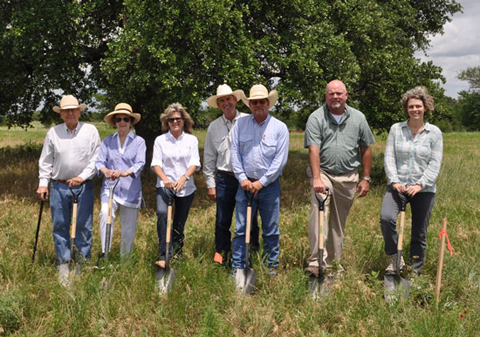
From left to right: Dixon Water Foundation Vice President Clint Josey and wife Betty Josey; Melissa Bookhout, the foundation’s treasurer and office manager; Robert Potts, the foundation’s president and CEO; Robby Tuggle, ranch foreman; Greg Gammill, president of Lincoln Builders; and Tenna Florian, Lake|Flato architect.

From left to right: Dixon Water Foundation Vice President Clint Josey and wife Betty Josey; Melissa Bookhout, the foundation’s treasurer and office manager; Robert Potts, the foundation’s president and CEO; Robby Tuggle, ranch foreman; Greg Gammill, president of Lincoln Builders; and Tenna Florian, Lake|Flato architect.

DECATUR, MARFA–The Dixon Water Foundation broke ground on June 17 on the Betty and Clint Josey Pavilion, which aspires to be the first “Living Building” in Texas.

The 5,000-square-foot pavilion will be a site for meetings and educational events at the Dixon Ranches Leo Unit in Cooke County. Lake|Flato architects of San Antonio have designed the facility to meet the Living Building Challenge, the most rigorous international green-building certification. Construction is expected to finish later this year.

To meet the standard, the pavilion will generate all of its own clean, renewable energy and capture and treat its own water. Building materials will be non-toxic and sourced responsibly and as locally as possible.

The Living Building Challenge is a natural fit for the Dixon Water Foundation’s mission of promoting healthy watersheds through sustainable land management. The Leo Unit is one of four Dixon Ranches where the foundation demonstrates environmentally and economically sound ways to manage rangeland. The foundation’s other ranches are in Cooke and Parker counties and Marfa, Texas.

The pavilion is named after Clint Josey, the foundation’s vice-president and board chairman, and his wife, Betty. As landowners, the Joseys have been advocates of holistic land management for 30 years.

Click here for a PDF of this press release.

Filed Under: Press Releases

Soil still teems with life after fire, SRSU student finds

May 12, 2013 by Dixon Water Foundation

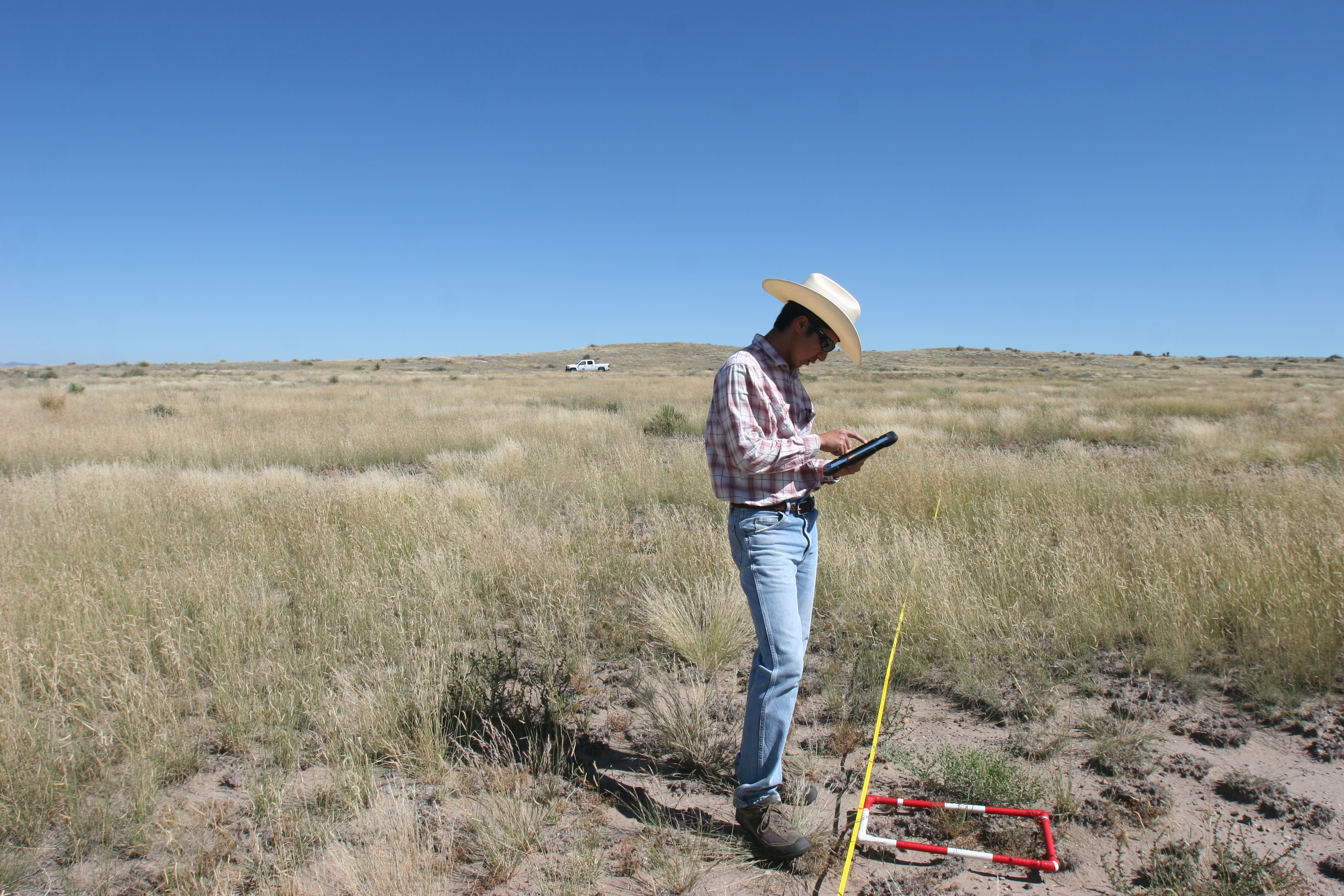
MARFA – Two years ago, the Rock House Fire and a record drought scorched most of the Dixon Water Foundation’s Mimms Ranch outside Marfa. The effects aboveground are still obvious, where grasslands are punctuated by patches of barren earth. But how did the fire and drought affect microbes toiling in the soil to create the nutrients grasslands require? This subterranean recovery was studied recently by Masahiro Ohnishi, a Natural Resource Management graduate student at Sul Ross State University in Alpine.

“We wanted to see what kinds of bacteria and archaea are in the soil after the fire and after the drought, and how they recovered from these huge disturbances,” says Ohnishi, whose research was funded by the Dixon Water Foundation, a non-profit that promotes healthy watersheds through sustainable land management.

Ohnishi collects soil data at Mimms Unit (Photo by Nora Ohnishi)

Ohnishi collects soil data at Mimms Unit (Photo by Nora Ohnishi)

Bacteria and archaea are single-celled microscopic organisms that are found practically everywhere—from deep-sea vents and arctic glaciers, to cattle intestines and human belly buttons. Many microbes belong to nature’s recycling crew; they break down dead plants and convert them into nutrients required by living plants. Microbes also help create a complex soil texture, which in turn allows seeds to take hold and more rainwater to soak into the ground. All of these functions make soil microbes essential members of a desert grassland ecosystem.

To determine which microbes populate Mimms Ranch, Ohnishi analyzed the microbial DNA in soil samples collected from several unburned, burned and intensely overgrazed sites. Then he used statistical analyses to compare these microbial communities before and after the summer rainy season in 2012. He also looked for correlations with the amount of plant cover, soil nutrients, and other soil characteristics at each study site.

In burned areas, Ohnishi found nearly half as much microbial DNA as in unburned areas, indicating soil microbes had been hit hard by the fire and drought. But microbial activity recovered after the summer rainy season at both burned and unburned sites. Ohnishi observed a corresponding increase in the amount of certain soil nutrients needed by grasses and other plants, which also bounced back after the summer rains.

Ohnishi was particularly amazed by the diversity of soil microbes he encountered. For example, one five-gram soil sample—the weight of a nickel—was home to around 400 types of bacteria.

“There’s so much diversity, and these microbes perform so many functions,” he said. “We have no clue what they all do yet.”

Understanding what each soil microbe does will be up to future researchers. For now, Ohnishi’s research demonstrates that these microbes are part of the recovery process after a devastating fire and drought. And he envisions his research contributing to a micro-ecosystem approach to land management, in which supporting microbial activity would be a way to improve rangeland health.

Bonnie Warnock, associate professor of range science at Sul Ross State University, directed Ohnishi’s research.

“Both the physical and biological health of the soil is critical to healthy ecosystems,” she said. “We tend to take the soil for granted and forget that it is, in a very real way, the base for all life.”

Filed Under: Press Releases Tagged With: grants, Mimms Unit, research, soil

OUR MISSION

The Dixon Water Foundation promotes healthy watersheds through sustainable land management to ensure that future generations have the water resources they need.

News & Events

  • Events
  • In The Media
  • Press Releases
  • Recent News

Browse by Month

NORTH TEXAS OFFICE

4528 County Road 398
Decatur, TX 76234

(940) 768‐2740

WEST TEXAS OFFICE

P.O. Box 177
Marfa, TX 79843

(432) 729-4600

STAY IN TOUCH

  • 
  • 

SEARCH

Copyright © 2026 · Outreach Pro Theme on Genesis Framework · WordPress · Log in